Why won’t my cat sleep in its bed? Because cats choose a sleeping spot on three things: warmth, cover, and how safe the approach feels. The bed itself is rarely what is wrong — the place it sits, the shape it was made in, or the smell it arrived with usually is.
That is why the same cat will sleep in a cardboard box, on clean laundry and on the one chair nobody uses: all three get those things right.
What a Cat Is Actually Looking For When It Sleeps
Cats sleep in short bouts and change position constantly. Three preferences explain almost all of that behaviour:
- Warmth. Cats are comfortable at warmer temperatures than we are, which is why a sunlit patch of floor or a laptop beats a padded bed in a cold corner. A bed has to hold warmth, not just be soft.
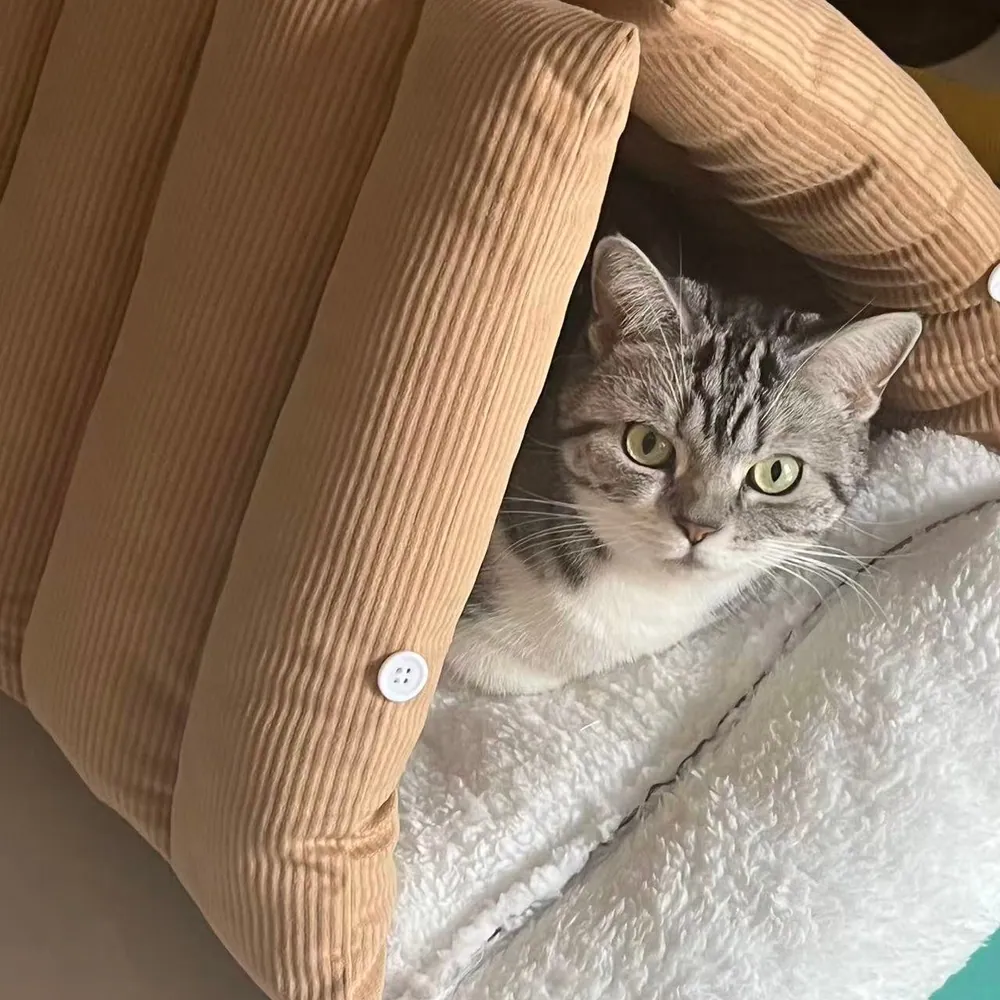
- Cover. Very few cats sleep in the open middle of a room. They want something on at least one side — a wall, a bolster, the back of a sofa — and something to rest a chin on.
- A safe approach. Not the middle of a corridor, not beside a door onto the rest of the house, not on the dog’s route through the room. Cats like to see what is coming, with a way out that does not mean walking towards the noise.
Color, price and how it looks beside the sofa are our preferences, not theirs.
Six Reasons Your Cat Won’t Sleep in Its Bed
1. It is too big
A bed a cat can stretch out in and still have room to spare feels exposed, not generous. Cats curl, and a curled cat wants the sides close enough to press against. This is the most common reason a bed gets ignored; the fix is usually to buy smaller than instinct suggests.
2. It is too open
A flat mat in the open is the least appealing shape for most cats in winter. Raised sides, a hood, or a shape that can stand up give the cat something to lean against and something between it and the room.
3. It is in the wrong place
Placement beats design. The bed has to sit where the cat already sleeps — the end of the sofa, the corner behind the door, the sunny patch at 3 p.m. — not where it fits the furniture, and out of walk-through routes. The iCatCare guide to a cat-friendly home makes the same point about keeping beds away from doorways and cat flaps, so the cat feels access is safe.
4. It smells wrong
A new bed arrives smelling of the factory, the bag and the detergent it was washed in. To a nose far better than yours, that is a stranger’s object — which is also why the laundry pile wins. Washing is necessary eventually, but a bed washed and put straight back is often ignored for days.
5. The surface is wrong
Cats knead before they settle, and the surface has to take it. Slippery synthetic covers slide under their paws, scratchy wool is unpleasant, and a bed that is too firm never gets a cat to lie down. Fleece, plush and brushed cotton are what cats work their paws into.
6. It cannot be adjusted
Cats dig, circle and rearrange before settling. A fixed shape, or sides that collapse under a paw, removes that ritual. A bed that holds its shape but can be changed is used differently in November than in May, which is how it avoids the cupboard by March.
How to Measure a Cat for a Bed
- Length: from the base of the tail to the tip of the nose, plus about 5 cm.
- Curl: watch the cat sleep. A cat that balls up wants a bed closer to its curled diameter than to its full length; a sprawler needs the length.
- Weight: most cats sit between 4 and 6 kg, but a big male can pass 7 kg, and the filling has to support that without flattening.
Two details matter as much as size: a low entry, because older cats and cats with arthritis find a high-sided bed painful to step into, and a base that does not slide when a cat jumps in.
Cave, Mat, Bolster or Triangle: Which Shape Suits Which Cat
- Cave (hooded). For cats that hide under furniture, sleep under the duvet, or are nervous of the room — though most cave beds only do one thing.
- Bolster (raised rim, open middle). The default for confident cats that sprawl with a chin on the edge; most dog beds are shaped this way too.
- Mat or pad. Right for a cat that already sleeps on hard surfaces, windowsills or your desk, and for summer — warmth without walls.
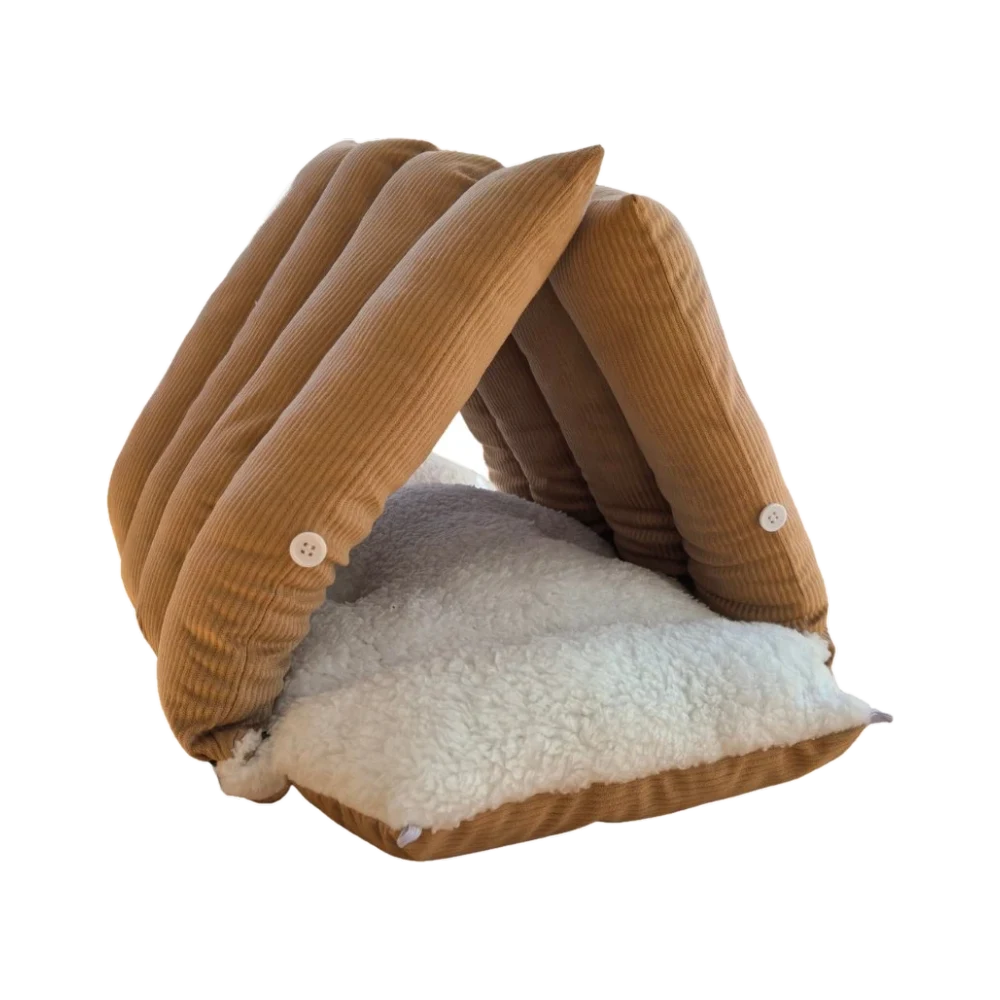
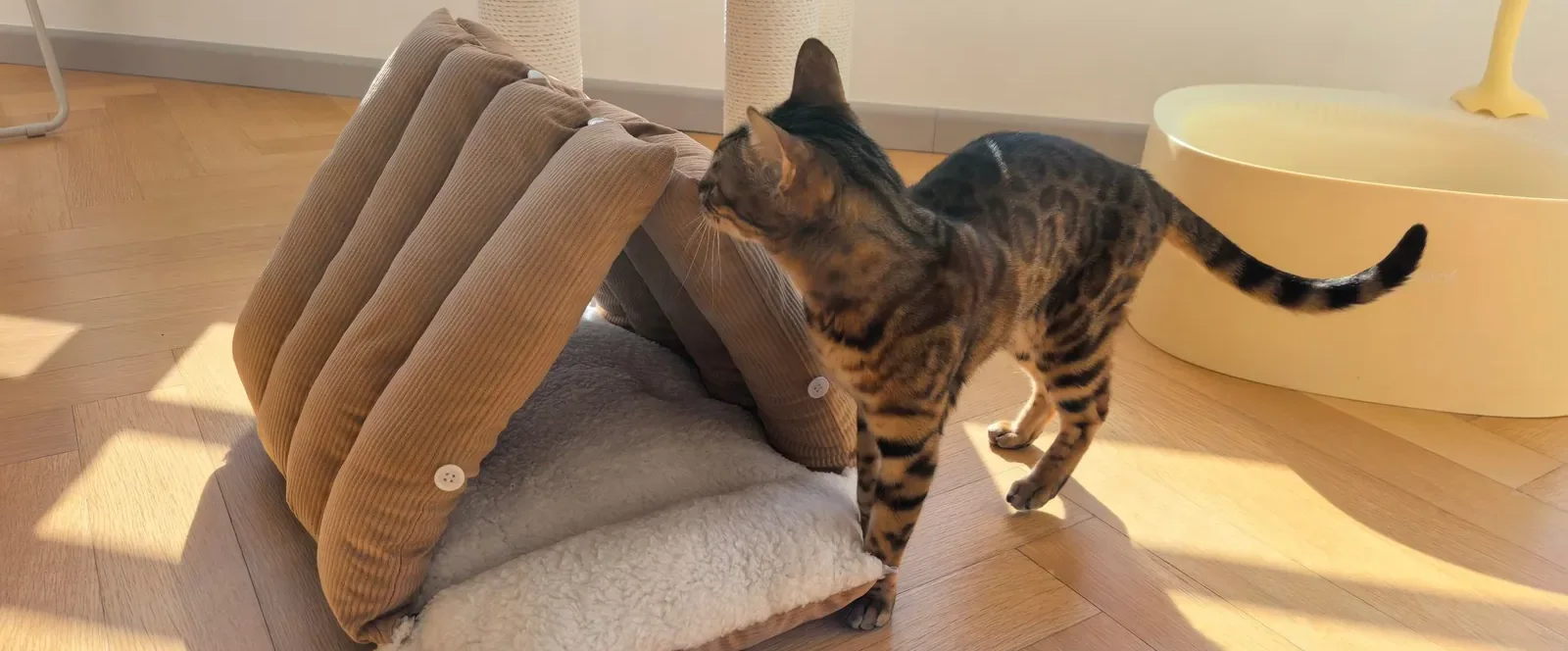
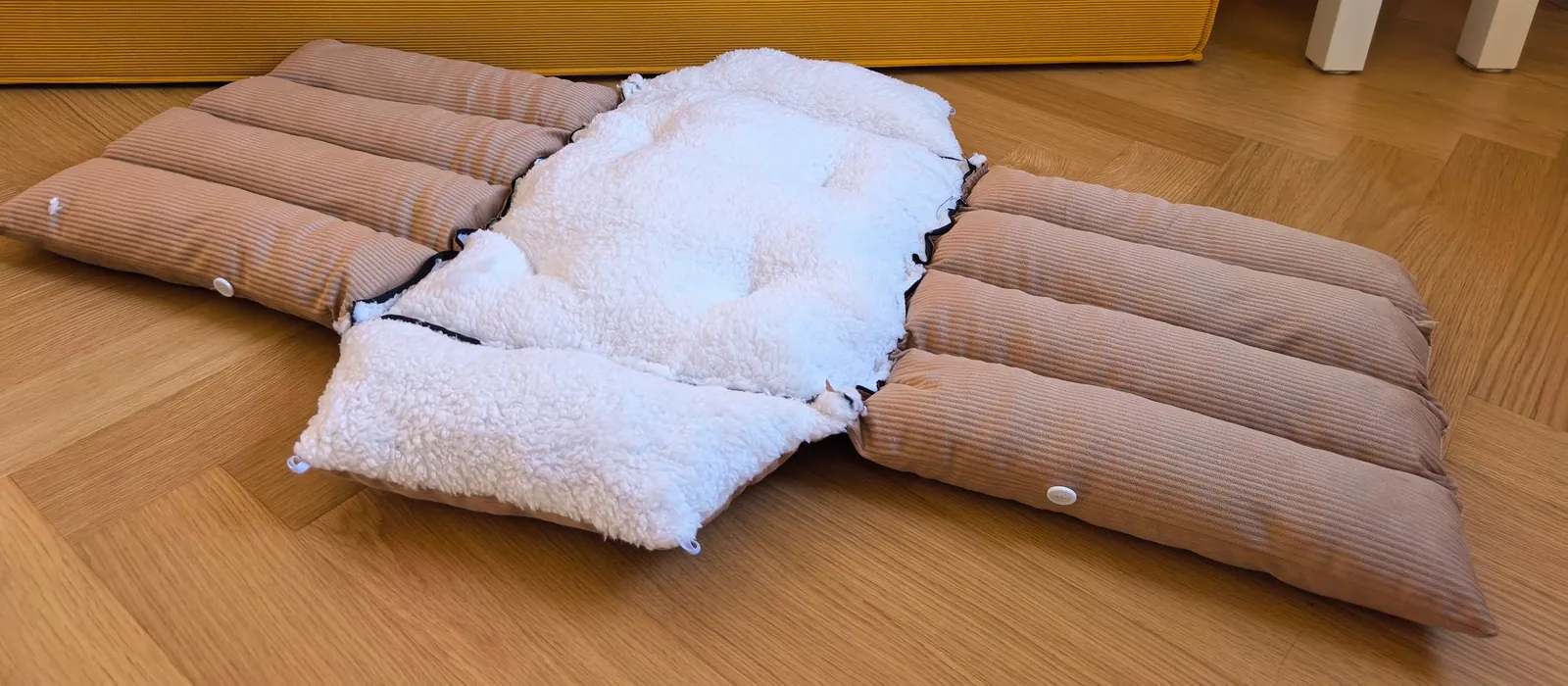
- Triangle or convertible. Two padded sides buttoned into a cave, opened into a sofa, or folded flat into a mat — one bed that changes with the season instead of a cave that is wrong for eight months of the year.
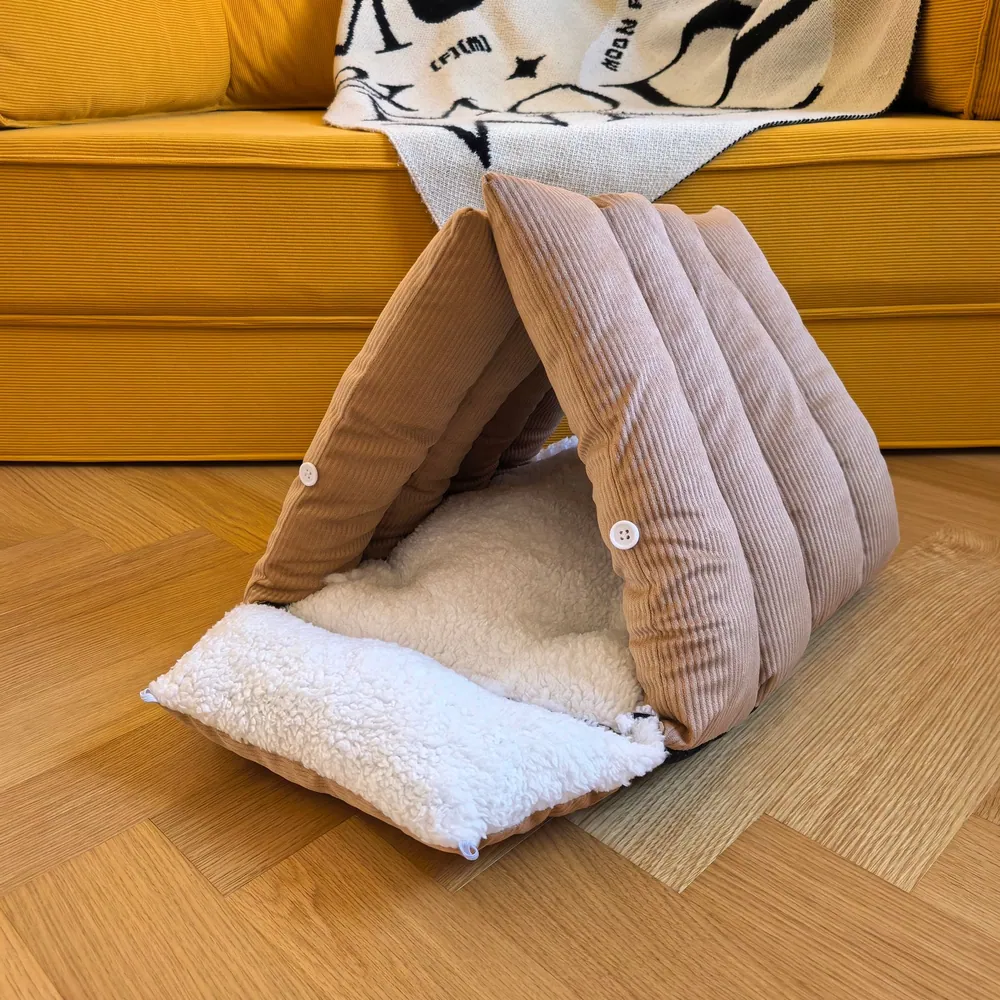
Meower’s 3-in-1 triangle cat bed is the last of those: 58 × 50 × 40 cm, with a waffle-weave outer, a white sherpa fleece lining, and a PP cotton fill stiff enough for the sides to stand up. Buttoned rather than zipped, and it suits cats and small dogs up to about 7.5 kg.
Why a Bed That Can Stand Up Gets Used All Winter
From November the competition changes. Floors near windows go cold, the sun moves, and a cat’s preference shifts to whatever holds warmth: a chair by the radiator, a pile of blankets, the gap behind a cushion.
Two things matter more than padding. Enclosure keeps a cat’s own heat around it, the way a coat does — a flat mat only insulates from below. And height off the floor matters for the same reason: a bed on cold tile loses heat downwards all night.
What makes the best cat bed for winter is therefore shape rather than thickness: sides that stay up, a fleece or plush surface, and a size small enough to trap warmth. A folded blanket can do the same job for a cat with a favorite corner — the honest answer to the cat bed vs blanket question — but a blanket flattens, slides, and provides no walls at all.
Put the bed near the radiator or a sunny window, not against either: pressed to a radiator the surface gets too hot, and against a window it sits in the coldest draught in the room. If the room is heated hard and the air is dry, how humid air affects pets covers that side of it.
Four Ways to Get an Ignored Bed Used Again
Try these before buying anything else. One of them usually works within two weeks.
- Move it to where the cat already sleeps. Not the corner you chose — the spot the cat chose. Even two meters can flip a bed from ignored to occupied.
- Make it smell like home. A worn T-shirt of yours, or a blanket the cat already sleeps on, for a week; remove it once the bed is in use.
- Put something in it. A few treats, a catnip toy, or a play session that ends on the bed. Kneading a surface is how a cat claims it.
- Leave it alone. Cats often ignore a new bed for a week or two, then use it as if they always had — moving it around restarts that clock.
What does not work is placing the cat in the bed and holding it there: that teaches the cat the bed is where boring things happen.
If You’re Buying One as a Gift
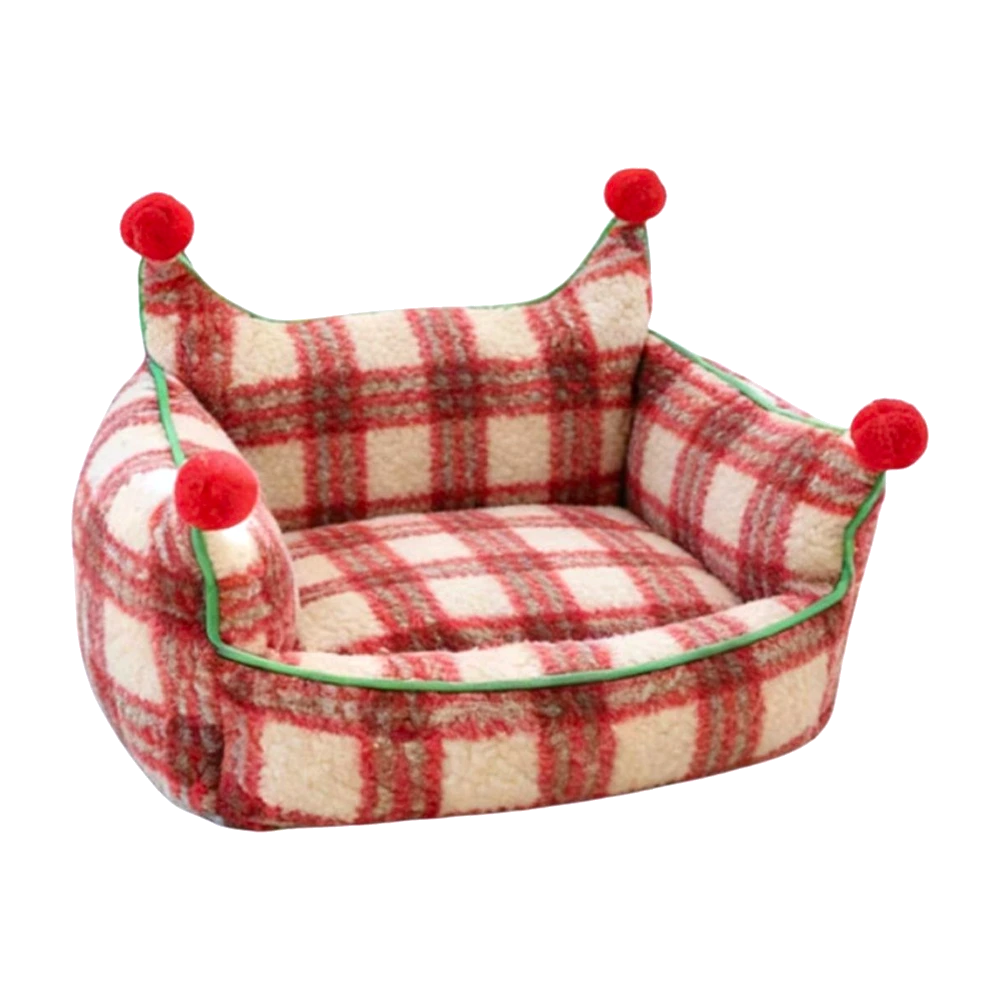
Festive beds are the seasonal trap: they sell out in December and get ignored in January, usually because the size was chosen for the photograph.
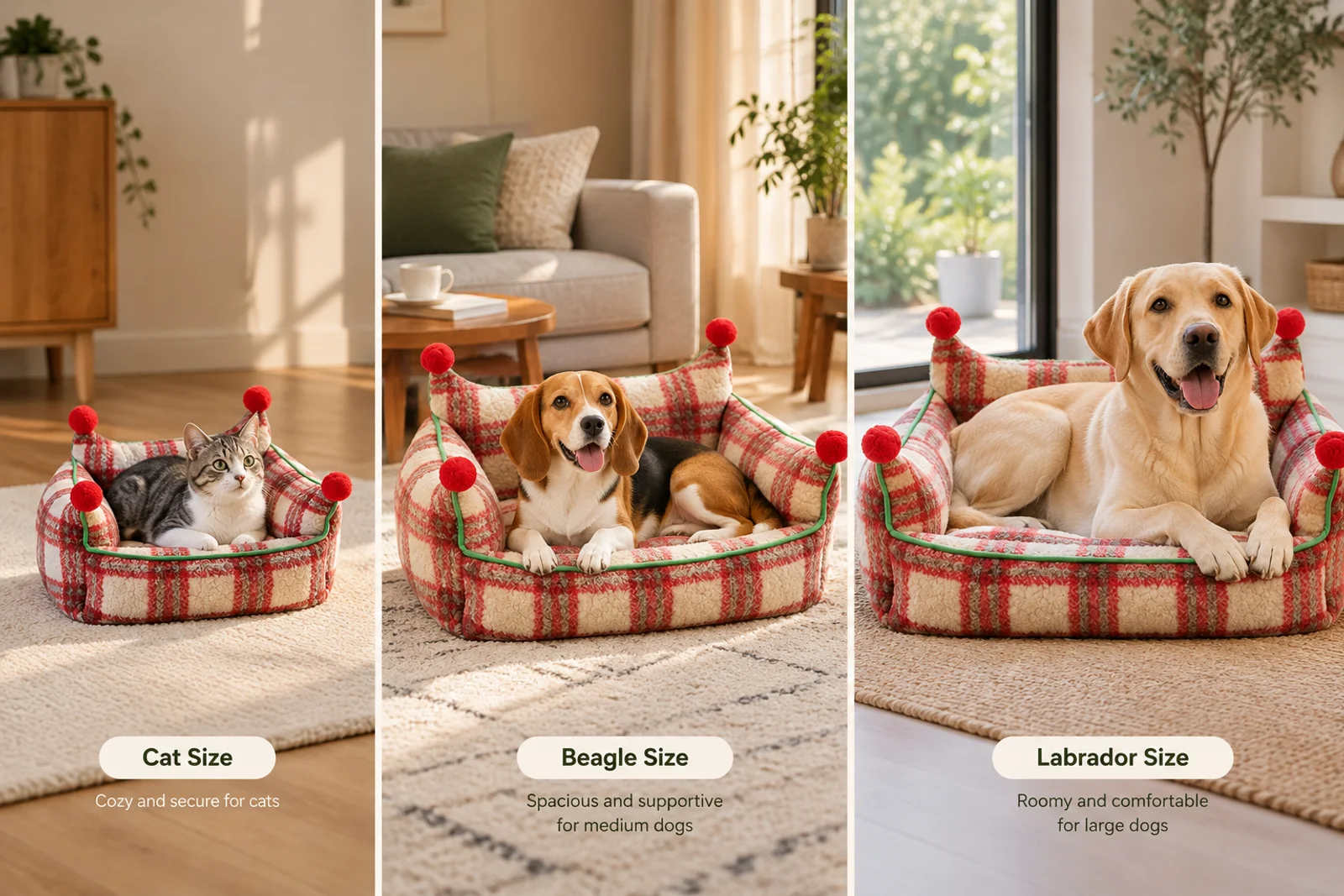
The Christmas plaid pet bed comes in three sizes: 40 × 30 × 20 cm for cats and small pets, 50 × 40 × 25 cm for a medium dog such as a beagle, and 60 × 50 × 30 cm for a larger dog such as a labrador. For a cat, take the small. In a multi-cat house, two small beds in two places beat one large one. Order early enough to arrive before the holiday.
FAQ
Why does my cat sleep on my bed instead of its own?
Warmth, your smell and height — your bed has all three. Put the cat bed on or beside your bed for a week or two, then move it step by step.
How long does a cat take to use a new bed?
Anywhere from an hour to a few weeks. Leaving it in one place and adding a familiar smell speeds that up more than moving it around.
Do cats prefer small beds or big ones?
Small, almost always: big enough to curl into, not to stretch out in. Cats want the sides close and something to press against.
The Short Version
Cats pick a sleeping place for warmth, cover and a safe approach. Buy smaller than instinct suggests, choose a shape with sides, and put it where the cat already sleeps. If a bed is ignored, move it, add a familiar smell, and give it two weeks. For winter, sides that stay up beat extra padding — and if one bed has to serve as cave, sofa and mat across the year, a convertible one earns its place.
Next step, if you are choosing one now: see the 3-in-1 triangle cat bed or browse the pet bed range. And if a cat will not settle anywhere, the tray is worth a look too — cat litter box smell covers that.