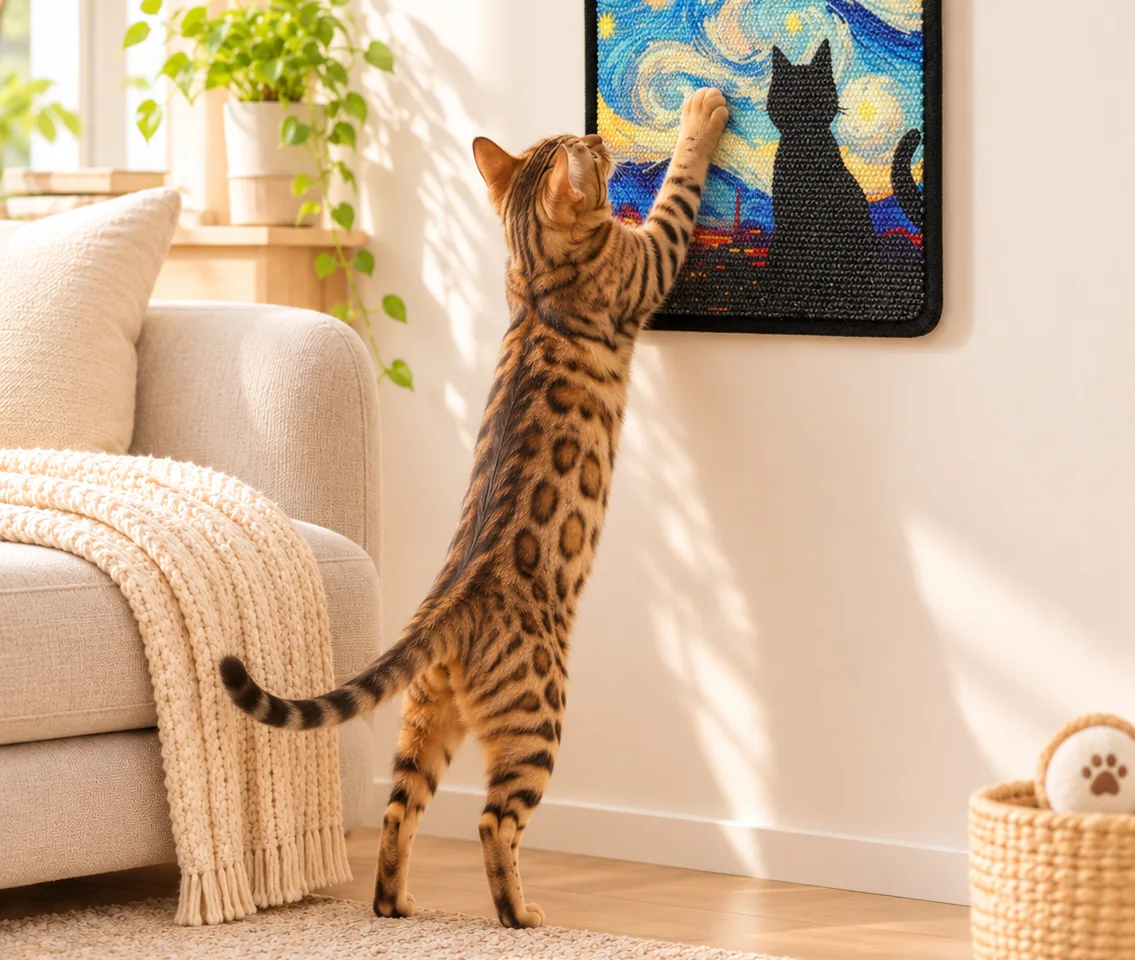
Cat scratching

Sisal Cat Scratcher & Lounger

A scratching board made from wrapped sisal rope instead of pressed cardboard, so it does not leave flakes on the floor. At 60 × 40 × 8 cm the raised rim also turns it into somewhere the cat can curl up — scratch first, sleep after.

  • Size 60 × 40 × 8 cm
  • Weight 600 g
  • Surface Sisal rope
  • Use Scratch and sleep
A Bengal cat stretching forward to scratch the sisal rope cat scratcher in a sunlit living room

Sisal, not cardboard

Why the surface matters more than the shape

Most first scratchers are pressed cardboard. They work, and cats take to them, but they are also a consumable: the paper breaks down under claws and ends up as flakes on the floor around the board. This one is wrapped sisal rope — a surface that keeps its shape under repeated scratching and does not crumble away.

01

No flakes under the board

A cardboard scratcher is pressed paper: it works, but it sheds a drift of flakes onto the floor around it. The surface here is wrapped sisal rope, which holds together and does not crumble away as the cat scratches.

02

A surface that keeps its shape

Rope wound around the board takes claws again and again without going soft in the middle, so the scratching surface stays flat and the cat keeps using it.

03

A rim the cat can lean on

The board stands 8 cm tall in total, with the edge raised all the way round. That holds the scratching area together and gives the cat something to brace against mid-stretch.

One size

60 × 40 × 8 cm · 600 g · wrapped sisal rope

Loading price…

Details

What you are getting

60 × 40 cm of surface

Roughly the length of a cat from chest to hind leg, and wide enough to stretch out across it.

Wrapped sisal rope

A rope surface rather than pressed paper, so scratching does not leave flakes behind.

Scratch, then sleep

The raised rim turns the whole board into a shallow bed the cat can curl up in afterwards.

600 g, one hand

Light enough to carry from the living room to the bedroom when the cat changes favourite spot.

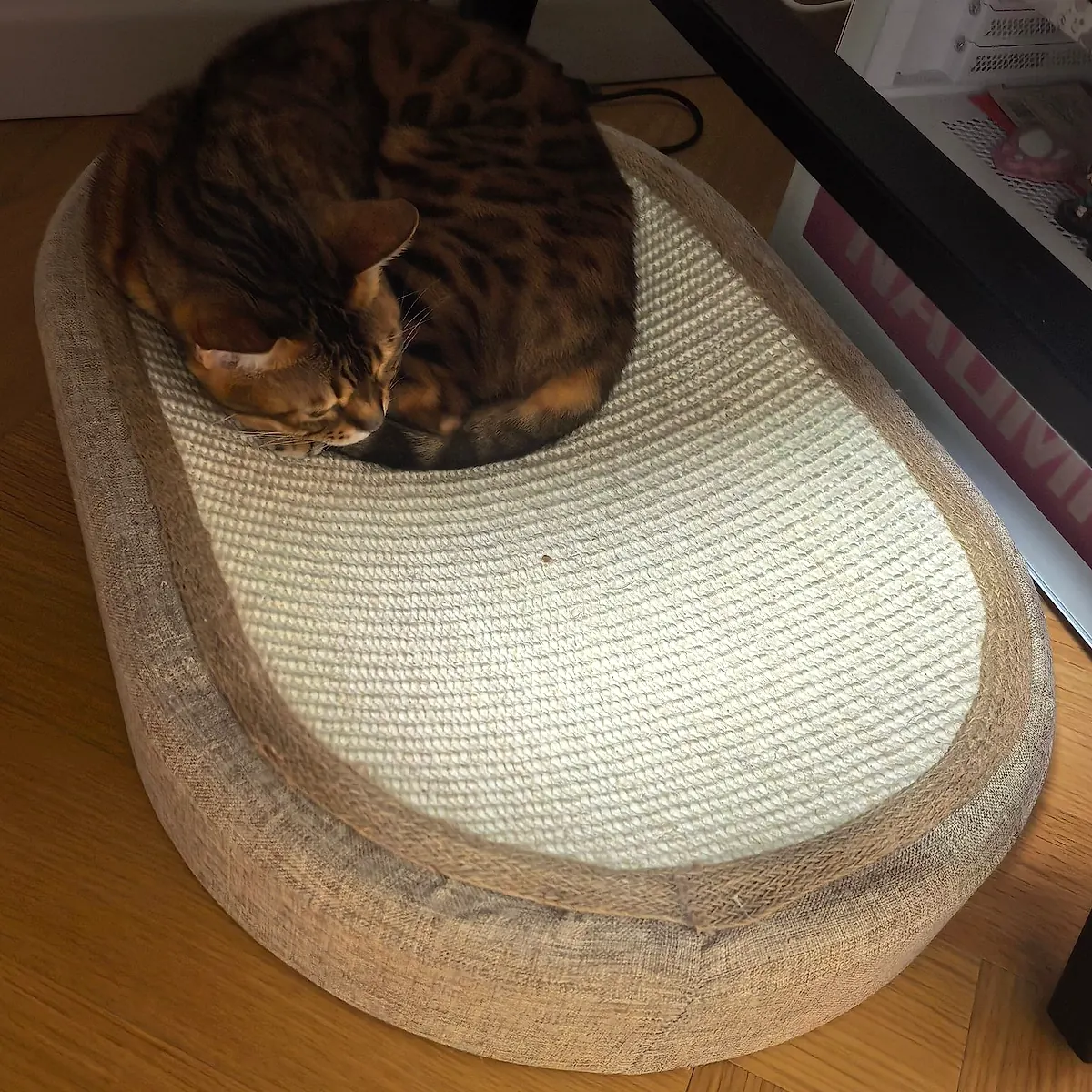
A Bengal cat curled up asleep on the sisal cat scratcher

Two jobs, one board

Scratch, then sleep in it

Cats scratch where they already spend time, and the spot they scratch is usually the spot they sleep. The board is 8 cm tall overall, so its raised edge gives the whole thing a shallow tray shape — after the stretching and the clawing the cat can simply settle into it instead of walking off to a separate bed.

The 60 × 40 cm surface is enough for one cat to curl up on, with the rim to lean a chin against. There is also a sisal ball on a cord at the edge for batting at — the same rope the cat is already scratching.

Looking after it

A rope surface, kept in good order

Nothing to replace and nothing to recharge — a little upkeep keeps the scratching surface usable for longer.

01

Vacuum, do not scrub

Run a vacuum brush or a soft hand brush over the surface every week or so to lift out the fibres the cat works loose.

02

Trim loose strands

If a strand works itself free, cut it off at the base with scissors instead of pulling it — pulling can unwind the wrap further.

03

Keep it dry

Sisal is a plant fibre, so keep the board out of the rain and wipe it with a dry or barely damp cloth rather than soaking it.

04

Turn it around

Cats pick a corner and work it hardest. Rotating the board now and then spreads the wear instead of wearing a hollow in one spot.

A Cat Scratcher That Doubles as Somewhere to Sleep

Cats scratch to stretch the shoulders and back, to leave a mark on the things they consider theirs, and to work the old outer layer off their claws. The behaviour is concentrated where the household already spends its time, which is why a board that sits in the middle of the room gets used far more than a post tucked out of sight. Cats also sleep where they scratch, so a scratcher that doubles as a sleeping spot fits the way they actually use a room.

The surface is the part that decides how long a scratcher lasts. Pressed-cardboard boards work, but they break down under claws and leave a drift of flakes on the floor around them. This board is wrapped sisal rope instead: the fibres are bound into a surface that holds its shape under repeated scratching, so the cat keeps the same reliable surface instead of one that softens in the middle.

At 60 × 40 cm the flat area is roughly the length of a cat from chest to hind leg — long enough to stretch out on and wide enough to turn around — while the board stands 8 cm tall in total, so its raised edge gives the cat something to brace against mid-stretch and turns the whole thing into a shallow bed afterwards. It weighs 600 g, so it can be carried from the living room to the bedroom with one hand when the cat changes favourite spot. A sisal ball on a cord sits at the edge for batting at.
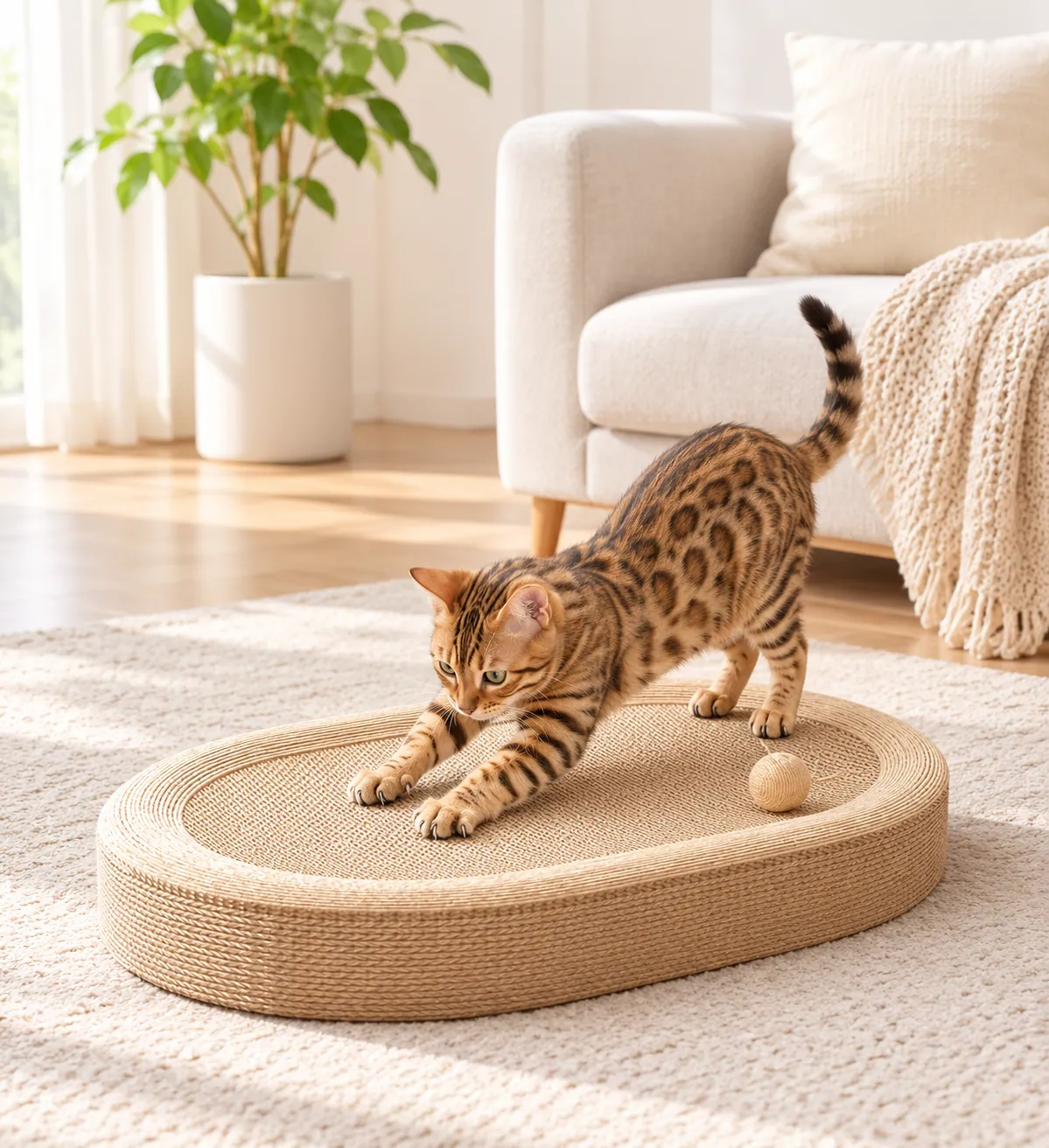
A Bengal cat stretching forward to scratch the sisal rope cat scratcher in a sunlit living room

Best suited to

  • Cats that scratch and sleep in the same corner of the room
  • Households that are tired of cardboard flakes on the floor
  • Living rooms and bedrooms where the scratcher is also the bed
  • Anyone who wants one piece of cat furniture instead of two

Key specifications

Type
Sisal rope cat scratcher and lounger
Size
60 × 40 × 8 cm
Weight
600 g
Surface
Wrapped sisal rope
Shape
Oval, with a raised rim and a sisal ball on a cord
Suits
Cats that would rather scratch and sleep in the same spot
Care
Vacuum the surface; trim loose strands rather than pulling them

Good to know

Frequently asked questions

What size is the sisal cat scratcher, and how heavy is it?

It measures 60 × 40 × 8 cm and weighs 600 g. The flat scratching area is roughly the length of a cat from chest to hind leg, and the board stands 8 cm tall in total, with the edge raised all the way round.

What is it made of?

The scratching surface is wrapped sisal rope — the same rope runs around the rim, with a sisal ball on a cord at the edge.

Will it leave flakes on the floor like a cardboard scratcher?

No. A cardboard board is pressed paper, which breaks down under claws and ends up as flakes around the board. A wrapped sisal rope surface holds together under scratching, so there is nothing to sweep up after the cat has finished.

Can my cat sleep on it?

Yes — that is what the rim is for. The 8 cm edge turns the board into a shallow tray shape with a raised side to lean against, so a cat can stretch, scratch and then curl up in the same spot.

How do I keep it clean?

Vacuum the surface, or brush it with a soft hand brush, every week or so. Trim any loose strands at the base with scissors rather than pulling them. Keep it dry: sisal is a plant fibre, so wipe it with a dry or barely damp cloth instead of soaking it.

Is it suitable for kittens and adult cats?

Yes. The flat 60 × 40 cm surface suits a kitten as easily as an adult cat, and the rope surface takes the very sharp claws of a kitten the same way it takes an adult cat scratching daily.

Sisal Cat Scratcher & Lounger
Loading price…
1