Air Purifier for Pet Dander in Bedroom: A Pet Parent’s Guide to a Cleaner Home
Cats bring warmth and companionship into a home. They also shed dander — microscopic flakes of skin that become airborne and can affect the air in the rooms where a family spends the most time.
The bedroom deserves particular attention. It is where children and adults spend hours every night, and where bedding, pillows and soft furnishings quietly collect particles far too small to see.
This guide explains what pet dander actually is, why bedrooms collect it, what HEPA filtration can and cannot do, and how to build a practical routine around it.
Life with Kids and Cats: Pet Hair Is Only Part of the Story
Anyone who lives with both children and a cat knows the pattern well.
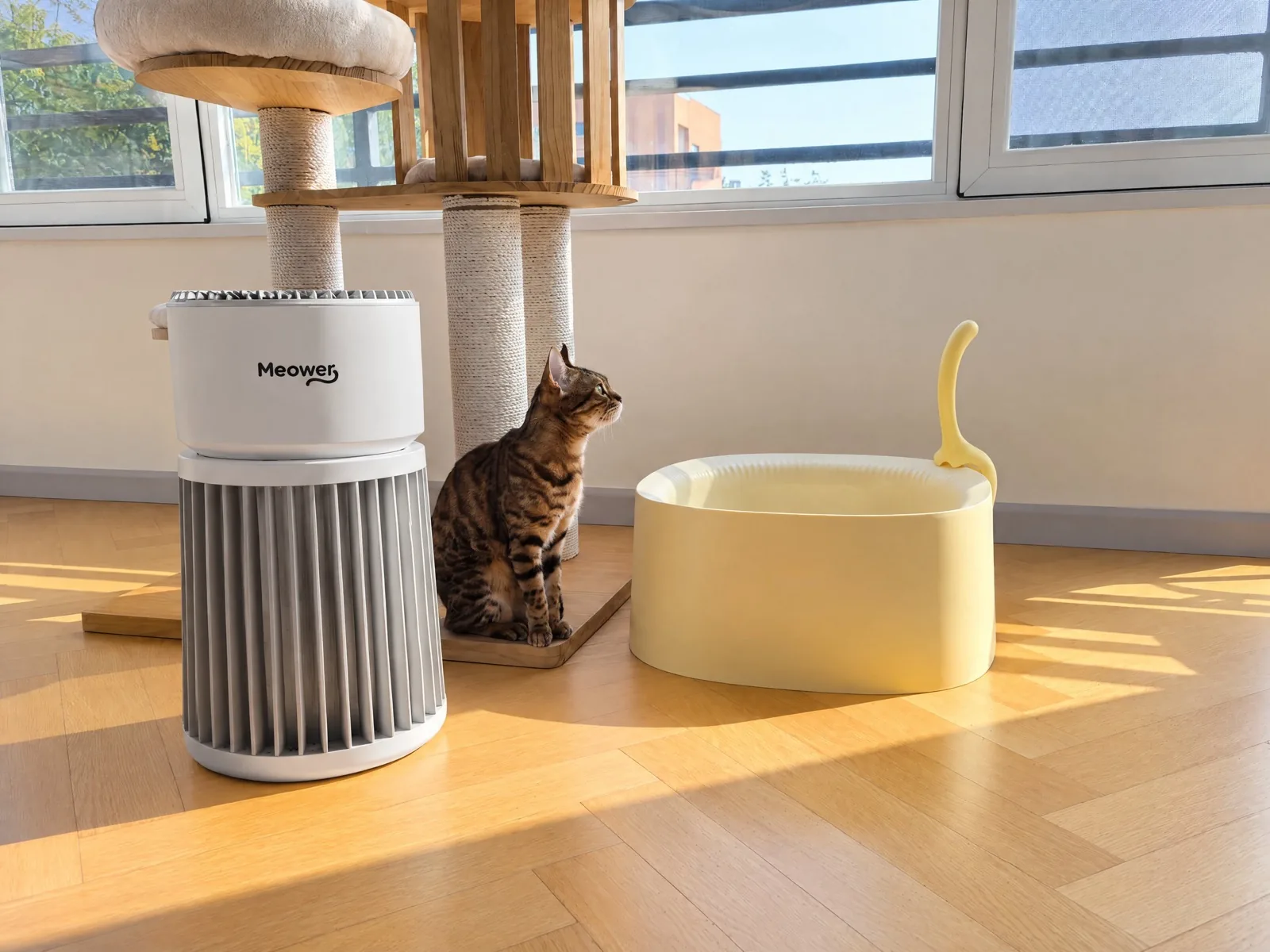
The living room gets vacuumed, the furniture gets wiped down, and the house finally feels clean. Then the cat jumps onto the sofa, curls up on a child’s bed, or leaves a fresh layer of fur on a favourite blanket.
The comfort a cat brings to a family is worth all of it. Watching children play with a pet is one of the small joys that makes a house feel like home.
But keeping a home clean with both kids and pets is genuinely difficult — and over time one important detail becomes clear: pet hair is only part of the problem.
Cats also release tiny particles of skin, commonly known as pet dander. These particles can become airborne and may trigger allergy symptoms in sensitive people.
That is the part that matters most for the air in a home, and especially in the bedroom.
What Is Pet Dander, and Why Does It Matter?
Pet dander consists of tiny flakes of skin shed by animals. Cats also produce proteins that can trigger allergic reactions in sensitive individuals. These proteins are found in dander, saliva and other materials associated with cats.
When cats groom themselves, allergens from their saliva transfer to their fur and skin. As cats shed skin cells and hair, those allergens spread through the home.
Unlike visible cat hair, pet dander is often far too small to see. It can become airborne, settle on bedding and furniture, and accumulate in the places a family spends time.
For people with cat allergies, exposure may cause symptoms such as:
- Sneezing and a runny or stuffy nose
- Itchy, watery eyes
- Coughing or throat irritation
- Worsening asthma symptoms in susceptible individuals
Not everyone who lives with a cat will experience these problems. But if someone in the household is sensitive to pet allergens, managing exposure indoors is worth considering.
Why the Bedroom Deserves Special Attention
The bedroom is where families spend hours every night — roughly a third of every day.
Even if the cat spends most of its day in the living room, the bedroom still collects pet hair and allergens through clothing, bedding and everyday movement. And if the cat sleeps on the bed, the challenge grows.
Three problems tend to come up again and again.
1. Pet allergens collect on bedding
Pillows, sheets, blankets and upholstered furniture collect pet hair and allergen-containing particles.
2. Cleaning visible hair does not remove everything
Vacuuming and wiping surfaces matter, but they do not necessarily remove all airborne particles.
3. Settled particles become airborne again
Every time someone moves around the room, makes the bed or shakes out a blanket, some settled particles can be lifted back into the air.
That is why bedroom cleanliness should involve more than what can be seen. A clean-looking bedroom and cleaner indoor air are not necessarily the same thing.
Can an Air Purifier Help with Pet Dander in the Bedroom?
This is where an air purifier for pet dander in the bedroom can be genuinely useful.
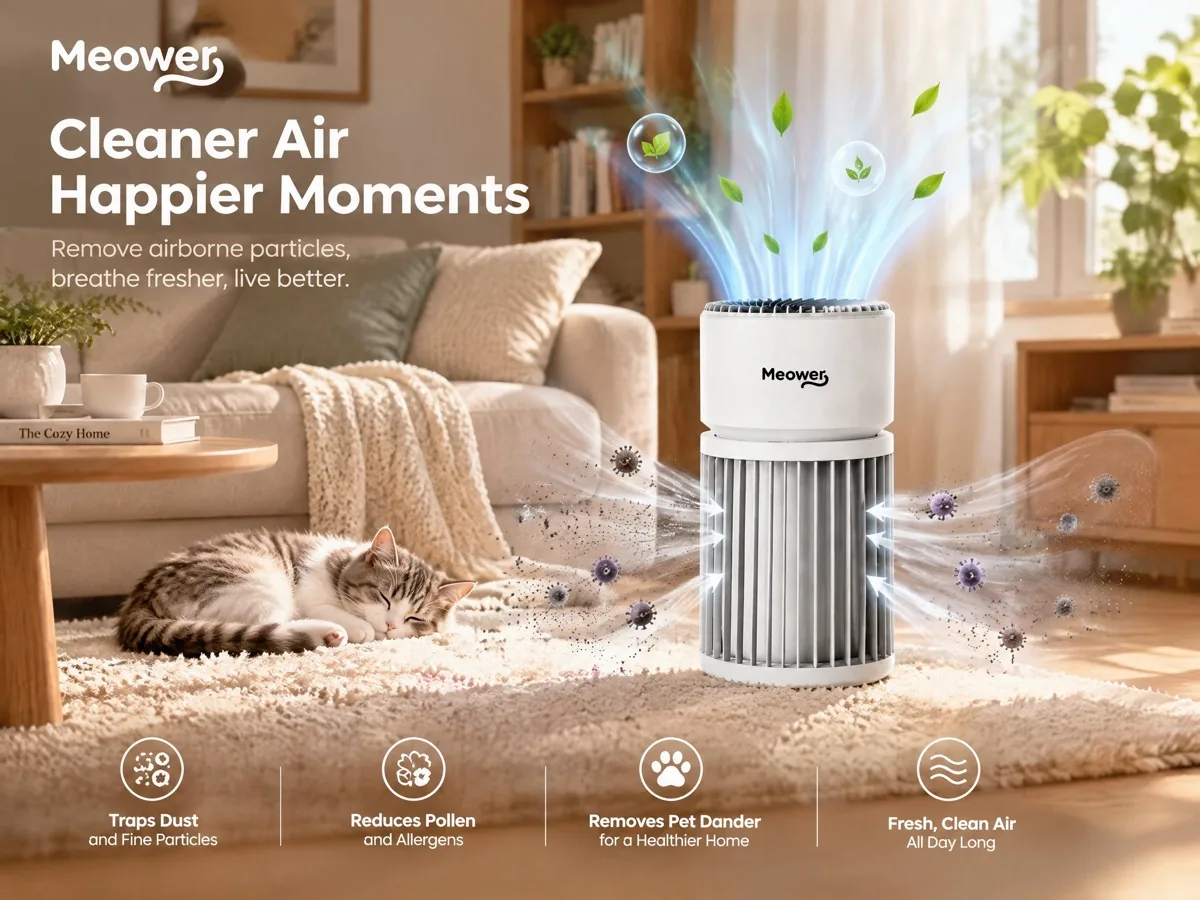
A properly sized air purifier fitted with a high-efficiency particulate air (HEPA) filter draws room air through the filter and captures airborne particles as it passes. HEPA filtration is designed to capture particles such as dust, pollen and pet dander.
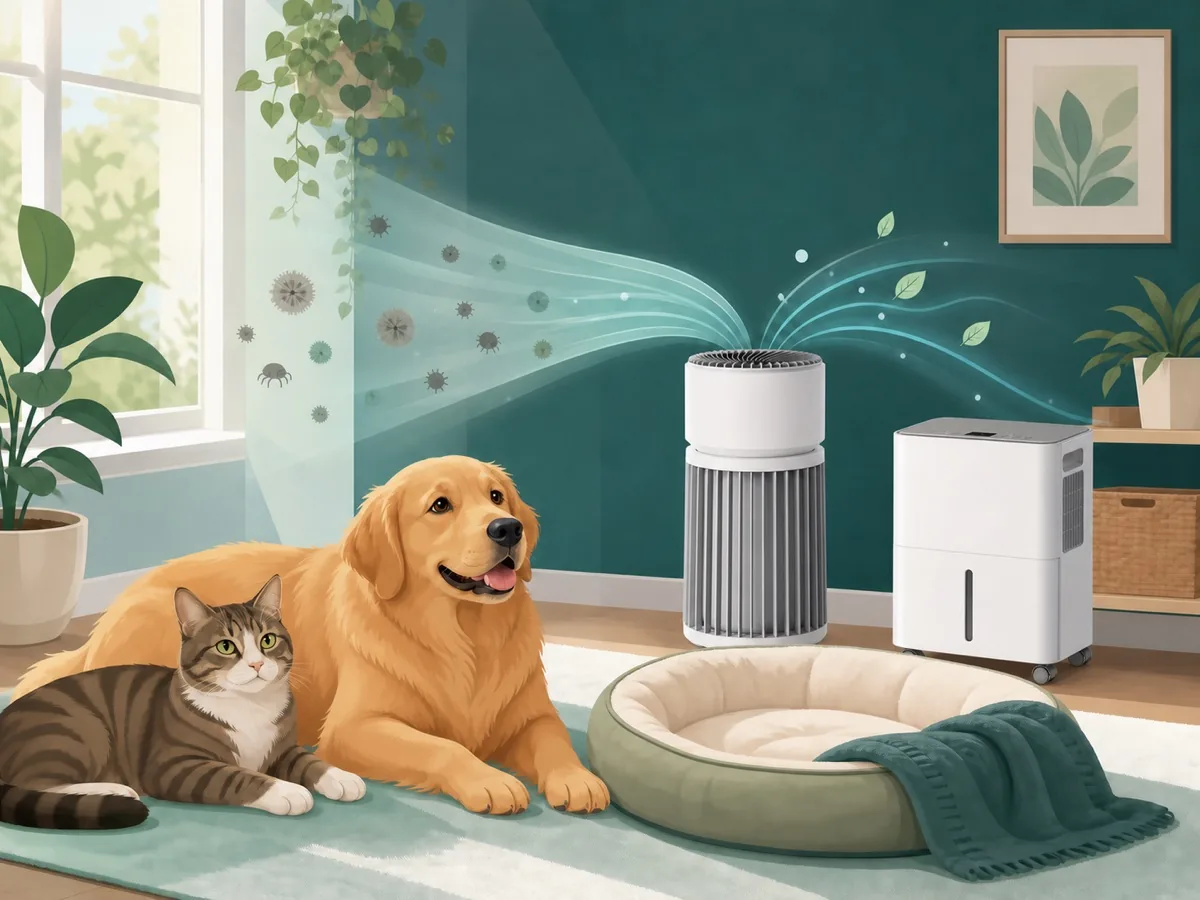
The U.S. Environmental Protection Agency explains that portable air cleaners can help reduce airborne particles indoors, although their effectiveness depends on factors such as the filtration system, airflow and room size.
For a bedroom shared with a furry family member, an air purifier adds another layer of particle filtration.
It is important to be clear about the limits, though. An air purifier cannot remove every allergen from a home. It will not stop a cat from producing allergens, and it does not clean particles that have already settled on bedding and furniture.
Air purification works best as part of a broader cleaning routine, not as a replacement for one.
What to Look for in a Bedroom Air Purifier for Pet Dander
Five practical features matter most when choosing an air purifier for a bedroom with pets.
1. Effective HEPA filtration
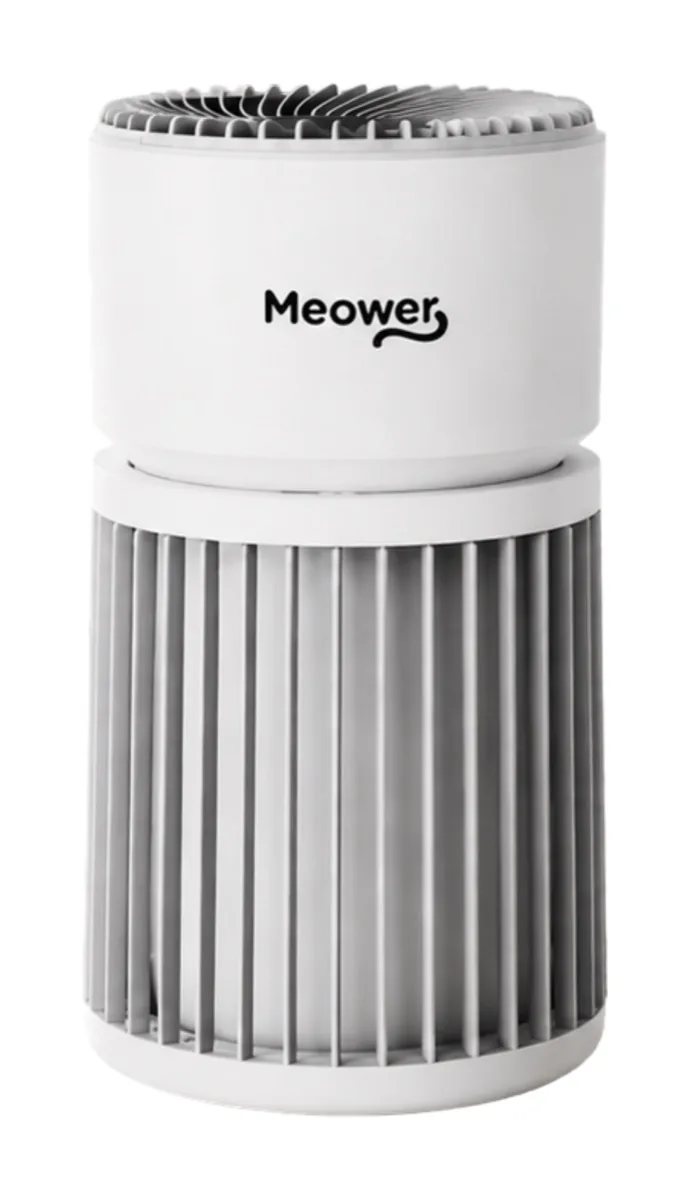
Look for a clearly specified high-efficiency particle filter designed to capture airborne particles. If pet allergens are the main concern, filtration should be one of the first considerations — Meower air purifiers use H13 HEPA media alongside a pre-filter and an activated carbon stage.
2. The right size for the room
A purifier needs to move enough air to clean the room effectively. Check the manufacturer’s recommended room size and Clean Air Delivery Rate (CADR). A purifier designed for a small bedroom may not suit a large master bedroom.
For most bedrooms, the Meower MW200 is a strong fit. Its 400 m³/h particle CADR covers rooms of roughly 20–40 m², and its 360° air intake draws air in from every direction rather than from a single face — so particles already circulating are captured instead of being left to settle again.
3. Quiet operation for better sleep
Nobody wants a noisy machine running beside the bed all night. A quiet operating mode makes it far easier to run an air purifier consistently while children sleep. The MW200 runs at 36–50 dB(A) depending on fan speed, so it can stay on overnight at its lower settings without becoming the thing anyone notices.
4. Easy filter replacement
Pet owners may need to clean or replace filters more often than the manufacturer’s baseline recommendation. Choose a model with clear maintenance instructions and replacement filters that are easy to obtain.
5. Practical everyday operation
Simple controls, convenient operation and an easy-to-maintain design make a real difference over months of daily use — especially in a household that is already busy.
An Everyday Routine for a Cleaner Bedroom with a Cat
An air purifier works best when combined with sensible household habits. A few practical steps are worth building into the week:
- Wash bedding regularly. Clean sheets, pillowcases and blankets help reduce the buildup of pet hair and allergens.
- Vacuum frequently. Pay attention to carpets, rugs, upholstered furniture and the places the cat likes to sleep.
- Keep the bedroom as a lower-pet-exposure zone. If someone in the household has a cat allergy, keeping the cat out of the bedroom can be an important measure. Allergens can still enter on clothing and other materials, so this is not absolute protection.
- Run the air purifier consistently. Follow the manufacturer’s guidance on operating modes, room size and filter maintenance. Continuous operation generally works better than switching the unit on only after symptoms appear.
- Groom the cat regularly. Appropriate grooming helps manage loose fur, although it does not eliminate the allergens cats produce.
If a child experiences persistent allergy symptoms, consult a healthcare professional to identify possible triggers and discuss suitable treatment.
A Little More Peace of Mind with Meower
Meower was built on a simple idea: pets are more than animals living in a home — they are part of the family.
Indoor air quality matters for the people and the pets who share a space. Meower air purifiers are designed to help families manage airborne particles as part of their everyday home environment.
When choosing a Meower model for a bedroom, look at the filtration specifications, room-size recommendation, airflow performance and noise level that best fit the household. The right air purifier is not simply about removing visible dust — it is about finding a practical solution that works with a family’s lifestyle.
Final Thoughts: You Can Love Your Cat and Care About Indoor Air
Living with children and cats does not mean choosing between a happy home and a cleaner indoor environment.
It is entirely possible to enjoy a pet’s companionship while taking practical steps to manage pet hair and airborne allergens.
Wash the bedding. Clean the floors. Create a lower-pet-exposure sleeping space where needed. And consider a properly sized HEPA air purifier to help reduce airborne pet dander.
For families looking for an air purifier for pet dander in the bedroom, the goal is not a perfectly sterile home. It is a home that feels comfortable, welcoming and thoughtfully cared for.
At Meower, the aim is to make cleaner indoor air part of everyday family life — for the people you love and the pets you love, too.
Meower — Cleaner Air for a Happier Home.